
Skunks: Identification, Damage, Prevention & Control
What Are Skunks?
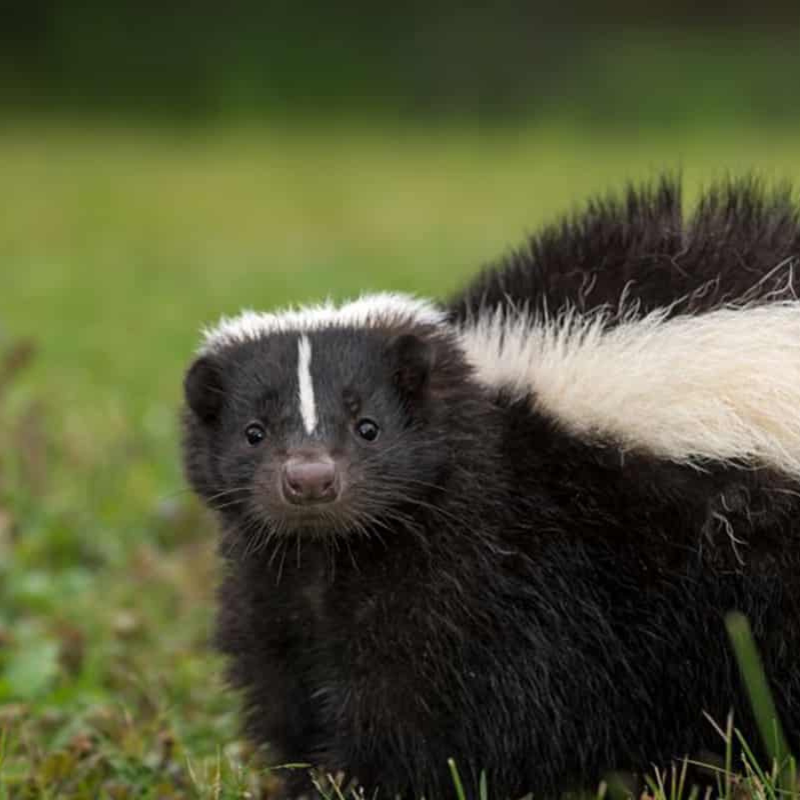
The Striped Skunk is one of the most recognizable wild animals found in North America. Skunks are medium-sized mammals known for their distinct black fur with white stripes and their ability to release a strong-smelling defensive spray.
Adult skunks typically measure 50 to 80 cm (20–31 inches) in length, including their bushy tail. They are primarily nocturnal, meaning they are most active at night while searching for food.
Skunks are opportunistic feeders and can adapt easily to urban and suburban environments, often living near homes, gardens, and parks.

Skunk Life Cycle and Development
Skunks usually breed in late winter, and after a gestation period of about 60 to 75 days, females give birth to litters of 4 to 7 young.
The young skunks stay in the den with their mother for several weeks before beginning to explore outside. By late summer or early fall, they become independent and search for their own territory.
Skunks may live 2 to 4 years in the wild, depending on environmental conditions and predators.
Where Skunks Live
Skunks prefer areas that provide shelter, food, and protection from predators. They often build dens in hidden or sheltered locations.
Common skunk denning sites include:
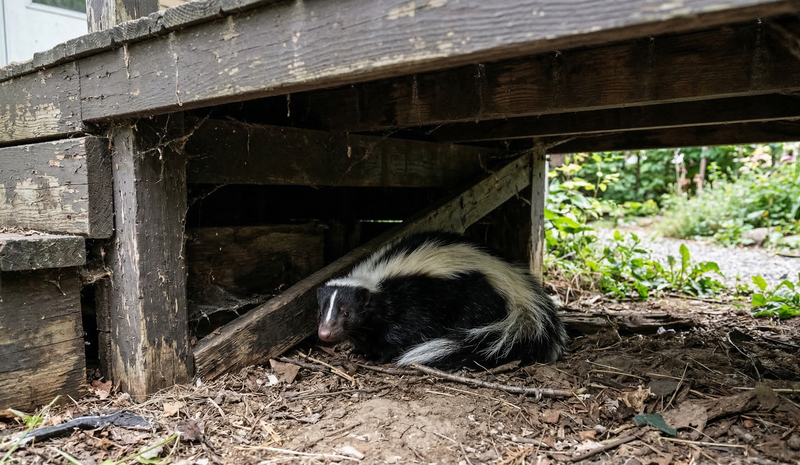
- Under decks, porches, or sheds
- Beneath crawl spaces or foundations
- Wood piles and brush piles
- Hollow logs or tree stumps
- Abandoned burrows from other animals
Around residential properties, skunks are often attracted to areas where food sources are easily available.
Are Skunks Harmful?
Skunk are generally not aggressive, but they can create several problems around homes and properties. They often dig holes in lawns while searching for insects and grubs, nest under decks, sheds, or buildings, and damage gardens and landscaping. When threatened, skunks may spray a strong defensive odor that can linger on pets, clothing, and outdoor areas, and in some cases they may carry diseases that can affect pets and wildlife.
Skunk Prevention Tips
Preventing skunks mainly involves removing food sources and blocking access to shelter areas.
- Keep garbage bins securely closed.
- Avoid leaving pet food outdoors overnight.
- Remove fallen fruit from trees.
- Control insect populations in lawns.
- Remove wood piles and brush near buildings.
- Keep vegetation trimmed around the property.
- Close off spaces beneath decks, porches, and sheds.
- Install fencing around gardens if necessary.
- Seal openings in foundations and crawl spaces.
- Inspect outdoor structures regularly for burrow entrances.
Professional Wildlife Control
If a skunk is living under your deck, shed, or around your yard, professional wildlife control can safely remove the animal and prevent further damage.
At R.D. Exterminateur, our technicians inspect your property, locate skunk denning areas, and implement safe and effective wildlife control solutions to remove skunks and prevent them from returning.
Contact our team today to schedule an inspection and keep your property protected from nuisance wildlife.

