
Rats: Identification, Damage, Prevention & Control
What Are Rats?
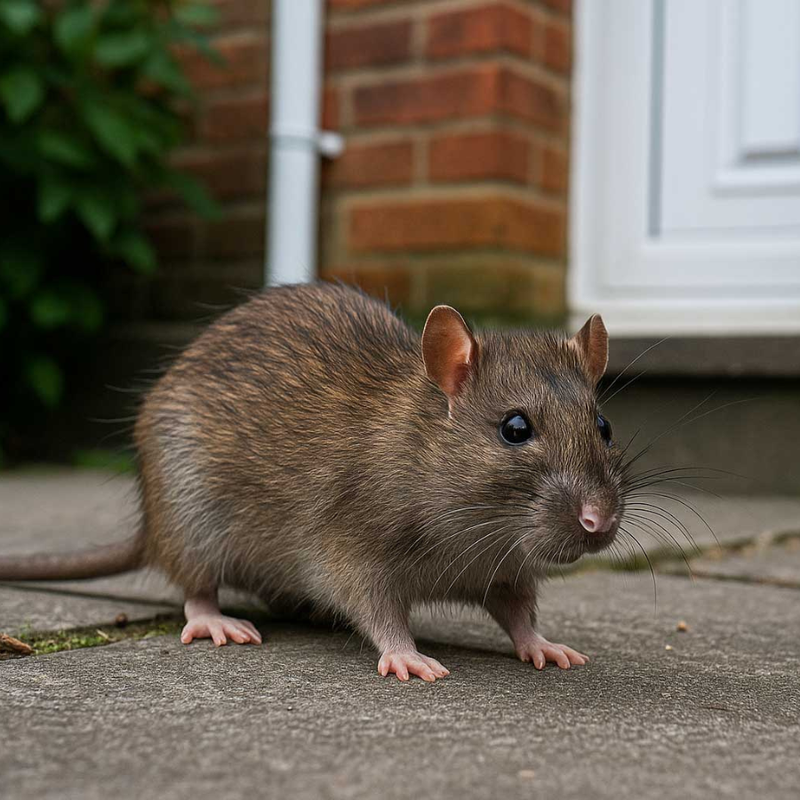
Rats are highly adaptable rodents that commonly live near human environments where food, water, and shelter are available. The two most common species found in homes and businesses are the Brown Rat (also called the Norway rat) and the Black Rat (also known as the roof rat).
Adult rats typically measure 20 to 25 cm (8–10 inches) in body length, with a long tail, large teeth, and strong bodies adapted for climbing, digging, and gnawing. Their fur is usually brown, gray, or black, depending on the species.
Rats are mostly nocturnal, meaning they are most active at night while searching for food and nesting materials.

Rat Life Cycle and Development
Rats reproduce very quickly, which allows infestations to grow rapidly if not addressed.
A female rat can produce 5 to 10 litters per year, with each litter containing 6 to 12 young. The gestation period is only about 21 days, and young rats can begin reproducing within two to three months.
Because of this rapid reproduction, a small rat problem can quickly turn into a large infestation.
Where Rats Live
Rats are excellent at adapting to different environments and can live both indoors and outdoors.
Common nesting locations include:
- Basements and crawl spaces
- Attics and wall voids
- Garages and storage rooms
- Sewer systems and drains
- Under decks, sheds, and foundations
- Garbage storage areas
Brown rats often build burrows in soil or under structures, while black rats are more likely to climb and nest in higher areas such as roofs and attics.
Are Rats Harmful?
Rat are serious structural and health pests that can cause major problems in homes, businesses, and food facilities. They can contaminate food and surfaces with droppings and urine, spread diseases and bacteria, and damage insulation and building materials. Rats also chew through wires, pipes, wood, and plastic, which can increase the risk of electrical fires, while creating unsanitary conditions and damaging stored food.

Rat Prevention Tips
Preventing rat infestations involves removing food sources and blocking entry points into buildings.
- Store food in sealed containers.
- Keep garbage bins tightly closed.
- Clean up crumbs and food spills promptly.
- Avoid leaving pet food exposed overnight.
- Keep yards free of debris and clutter.
- Trim vegetation near buildings.
- Store firewood away from the house.
- Close gaps around doors, windows, vents, and pipes.
- Repair cracks in foundations and walls.
- Install door sweeps and rodent-proof screens.
Rat Control Methods
Controlling rats requires a combination of sanitation, exclusion, and population control methods.
Effective strategies may include:
- Installing rodent traps or bait stations
- Sealing entry points and nesting areas
- Removing accessible food sources
- Monitoring areas with signs of rodent activity
Signs of rat activity may include droppings, gnaw marks, scratching noises in walls, or greasy rub marks along surfaces.
Professional Pests Control
If you notice signs of rats in your home, attic, basement, or yard, professional pest control is the most effective way to eliminate the infestation and prevent further damage.
At R.D. Exterminateur, our technicians inspect your property, locate nesting areas, and install secure rodent control systems designed to eliminate rats and prevent them from returning.
Contact our team today to schedule an inspection and protect your property from rodent infestations.

