
Mice: Identification, Damage, Prevention & Control
What Are Mice?
Mice are small rodents that commonly live in close proximity to humans. The most common species found in homes and buildings is the House Mouse.
Adult house mice usually measure 7 to 10 cm (3–4 inches) in body length, with a long thin tail, large ears, and gray to brown fur. Despite their small size, mice are extremely adaptable and can enter buildings through openings as small as 6 mm (¼ inch).
Mice are mostly nocturnal, meaning they are most active at night while searching for food and nesting materials.

Mouse Life Cycle and Development
Mice reproduce very quickly, which allows infestations to grow rapidly if not addressed early.
A female mouse can produce 5 to 10 litters per year, with each litter containing 5 to 8 young. The gestation period is about 19 to 21 days, and young mice can begin reproducing in as little as 6 weeks.
Because of their fast reproduction, even a small number of mice can quickly become a serious infestation.
Where Mice Live
Mice prefer areas that provide shelter, warmth, and easy access to food. They often build nests using shredded materials such as paper, fabric, and insulation.
Common nesting areas include:
- Wall voids and insulation
- Attics and ceilings
- Basements and crawl spaces
- Garages and storage rooms
- Behind appliances or cabinets
Outdoors, mice may live in:
- Gardens and dense vegetation
- Wood piles and debris
- Under sheds, decks, or foundations
Becase mice are excellent climbers and can squeeze through small gaps, they can easily move between indoor and outdoor environments.
Are Mice Harmful?
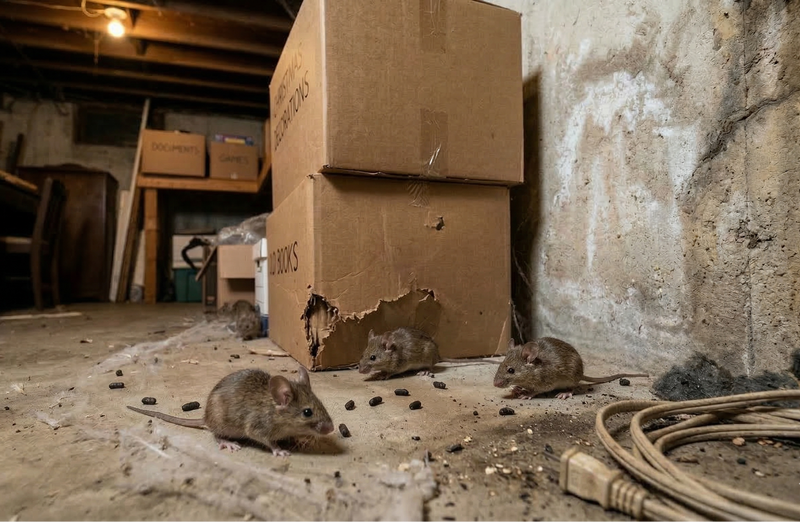
Mouse can pose serious health and structural risks in homes and businesses. They contaminate food and surfaces with droppings and urine, spread bacteria and pathogens, and chew through wires, insulation, wood, and plastic, creating fire hazards. Mice also damage stored food and packaging, and common signs of infestation include droppings, scratching sounds in walls, gnaw marks, and nests made of shredded materials.

Mouse Prevention Tips
Preventing mice involves blocking entry points and removing food sources.
- Close gaps around doors, windows, vents, and pipes.
- Seal cracks in foundations and walls.
- Install door sweeps and repair damaged screens.
- Store food in sealed containers.
- Clean crumbs and food spills promptly.
- Keep garbage bins tightly closed.
- Trim vegetation near the building.
- Keep firewood and debris away from foundations.
- Maintain clean yard areas.
Mouse Control Methods
Effective mouse control requires removing nesting areas and reducing access to food and shelter.
Common control methods include:
- Installing traps or bait stations
- Sealing structural openings where mice enter
- Removing clutter where mice may hide
- Monitoring areas where rodent activity has been observed
Because mice are cautious and reproduce quickly, controlling them often requires consistent monitoring and treatment.
Professional Pests Control
If you notice signs of mice in your home, attic, basement, or business, professional pest control is the most reliable way to eliminate the infestation and prevent further damage.
At R.D. Exterminateur, our technicians inspect your property, identify entry points and nesting areas, and install effective rodent control systems designed to eliminate mice and prevent them from returning.
Contact our team today to schedule an inspection and protect your property from rodent infestations.

