
Marmots: Identification, Damage, Prevention & Control
What Are Marmots?
Marmots are large ground-dwelling rodents belonging to the squirrel family Sciuridae. One of the most common species found in North America is the Groundhog, also known as a woodchuck.
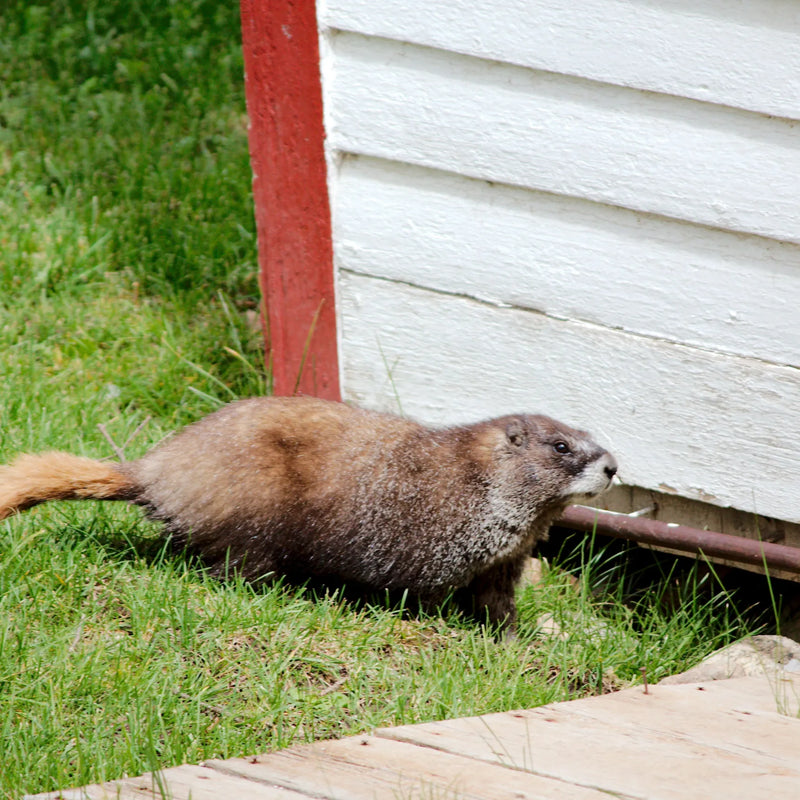
These animals typically measure 40 to 65 cm (16–26 inches) in length, with a short bushy tail and thick brown or gray fur. Marmots have strong claws that allow them to dig extensive underground burrow systems.
They are active during the day and are often seen feeding in open areas such as gardens, lawns, fields, and near wooded areas. Marmots hibernate during the winter and become active again in early spring.

Marmot Life Cycle and Development
Marmots usually mate in early spring shortly after emerging from hibernation. After a gestation period of about 30 to 32 days, the female gives birth to a litter of 2 to 6 young.
The young marmots remain in the burrow for several weeks before emerging. They become independent within a few months and may establish their own burrow systems nearby.
Marmots can live 3 to 6 years in the wild, and their burrows may be reused or expanded over multiple seasons.
Where Marmots Live
Marmots prefer areas with loose soil and nearby vegetation, which allow them to dig complex burrow systems. Their burrows often include multiple entrances and tunnels used for nesting, shelter, and escape from predators.
Common places where marmots may live include:
- Open fields and meadows
- Gardens and farmland
- Forest edges
- Under sheds, decks, or porches
- Near fences or building foundations
A marmot burrow may have several entrance holes, often surrounded by mounds of soil.
Are Marmots Harmful?
Marmots can cause property and garden damage by eating vegetables, fruits, and plants, and digging large underground burrows. Their tunnels can damage lawns, landscaping, patios, and even weaken foundations, making marmots a common nuisance around homes and gardens.

Marmot Prevention Tips
Preventing marmot problems often involves removing food sources and blocking access to potential burrowing areas.
- Install fencing buried at least 30 cm (12 inches) into the ground.
- Use sturdy wire mesh around vegetable gardens.
- Remove fallen fruits and garden debris.
- Keep grass trimmed around your property.
- Remove brush piles, wood stacks, and dense vegetation.
- Avoid leaving food sources accessible outdoors.
- Close gaps under sheds, decks, and porches.
- Reinforce vulnerable areas with wire mesh or hardware cloth.
- Inspect foundations for holes or burrow entrances.
Professional Wildlife Control
If marmots are digging burrows in your yard, garden, or near your foundation, professional wildlife control can help protect your property and prevent further damage.
At R.D. Exterminateur, our technicians inspect your property, locate active burrows, and implement safe and effective marmot control solutions to remove the animals and prevent future activity.
Contact our team today to schedule an inspection and keep your property protected from burrowing wildlife.

