
Larder Beetles: Identification, Damage, Prevention & Control
What Are Larder Beetles?
The Larder Beetle is a common stored product pest that feeds on dried animal products and organic materials. It belongs to the beetle family Dermestidae, which includes several species known for infesting stored foods and animal-based materials.
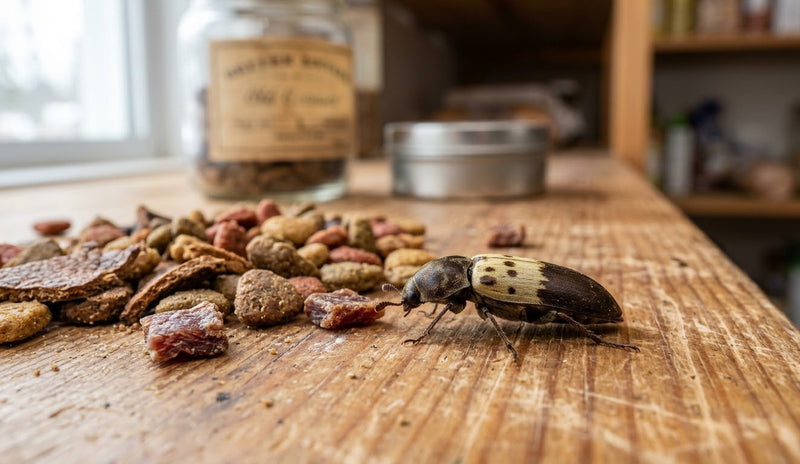
Adult larder beetles measure about 7 to 9 mm in length and have dark brown to black bodies with a distinct pale band across the middle of their wings, often marked with small dark spots. Their larvae are brown, hairy, and elongated, growing up to 13 mm in length.
These beetles are commonly found in pantries, storage areas, warehouses, and homes, especially where animal-based products are present.
They measure approximately 8 mm. The female lays about 200 eggs on a food source, and about twelve days later, the larvae hatch. In their larval stage, larder beetles are small, slightly hairy brown worms, 3 to 5 mm long. Their heads bear two short, club-shaped antennae.

Larder Beetle Life Cycle and Development
Larder beetles undergo complete metamorphosis, which includes four stages: Egg, Larva, Pupa, Adult beetle
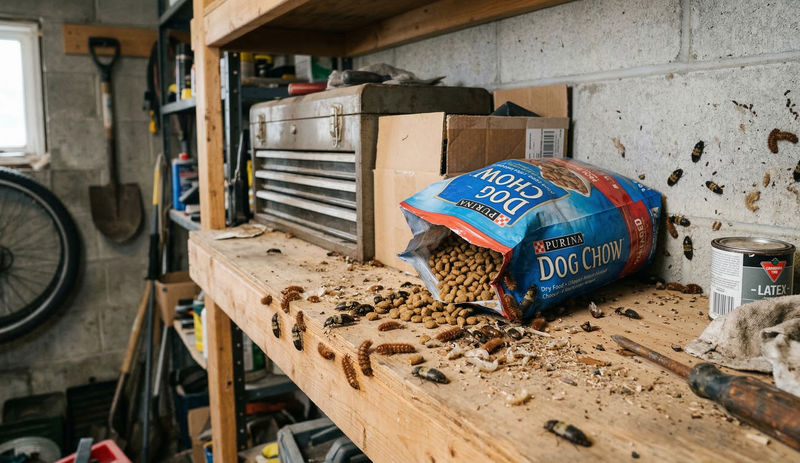
Female beetles lay eggs near suitable food sources such as dried meat, pet food, cheese, or dead insects. After hatching, the larvae feed on these materials while growing.
The larval stage can last several weeks, during which larvae may also bore into wood, insulation, or other materials to pupate. This behavior can sometimes cause structural damage in homes.
Under favorable conditions, the life cycle can be completed in one to three months.
Where Larder Beetles Live
Larder beetles are attracted to areas where animal-based food sources or organic materials are available. Common locations include:
- Kitchen pantries and cupboards
- Pet food storage areas
- Bird seed containers
- Garages and basements
- Attics or wall voids
- Warehouses and food storage facilities
They may also appear in homes if there are dead insects, rodents, or birds inside walls or attics, as these provide a food source for developing larvae.
Are Larder Beetles Harmful?
Larder beetle are not dangerous to humans, but they can cause serious contamination and damage to stored products. These pests commonly infest dried foods and pet food, contaminate items with larvae, shed skins, and waste, and can damage stored meats, cheeses, and other animal-based products. During development, they may also bore into wood or structural materials, and if left untreated, infestations can spread quickly throughout homes or storage areas.
Larder Beetle Prevention Tips
Preventing larder beetles mainly involves proper food storage and sanitation.
- Keep dried foods and pet food in sealed airtight containers.
- Store animal-based products in refrigerated or protected environments.
- Avoid leaving food exposed for long periods.
- Clean pantry shelves regularly.
- Vacuum food crumbs and debris from cabinets and floors.
- Inspect food packages for signs of infestation.
- Dispose of dead insects or rodents promptly.
- Inspect attics and wall voids if unusual beetle activity appears.
- Keep garbage bins sealed and cleaned.
Professional Pests Control
If larder beetles continue appearing in your pantry, storage areas, or throughout your home, professional pest control can help identify hidden infestation sources and eliminate the problem effectively.
At R.D. Exterminateur, our technicians inspect your property, locate infestation sources, and apply targeted pest control treatments to eliminate larder beetles and prevent them from returning.
Contact our team today to schedule an inspection and keep your home or business protected from stored product pests.

