
Earwigs: Identification, Damage, Prevention & Control
What Are Earwigs?
The European Earwig is one of the most common earwig species found around homes and gardens. Earwigs are small insects recognized by the pair of curved pincers (cerci) at the end of their abdomen.
Adult earwigs usually measure 12 to 25 mm (½–1 inch) in length and have elongated brown bodies with long antennae. Although many species have wings, earwigs rarely fly and instead prefer to crawl and hide in dark places.
Earwigs are mostly nocturnal, meaning they are active at night and hide during the day in moist, sheltered areas.

Earwig Life Cycle and Development
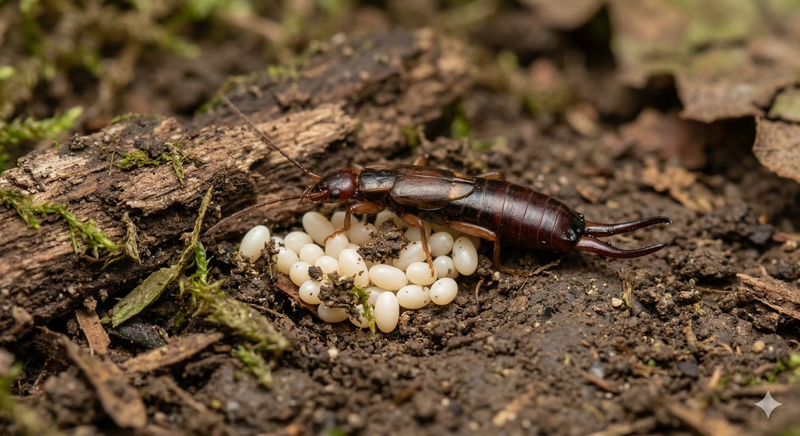
Earwigs have a simple three-stage life cycle consisting of egg, nymph, and adult. Female earwigs typically lay their eggs in soil or protected outdoor areas, where they display a unique behavior among insects by guarding and caring for their eggs and young nymphs until they are able to survive on their own.
After hatching, earwig nymphs resemble smaller versions of adult earwigs and develop through several molts before reaching maturity. Earwig populations often increase during warm and humid conditions, which can lead to larger numbers around homes and gardens.
Where Earwigs Live
Earwigs prefer damp environments and shaded areas where they can hide during the day.
Common places where earwigs are found include:
- Under rocks, mulch, or garden debris
- Beneath flower pots or outdoor furniture
- In compost piles or leaf litter
- Around foundations and exterior walls
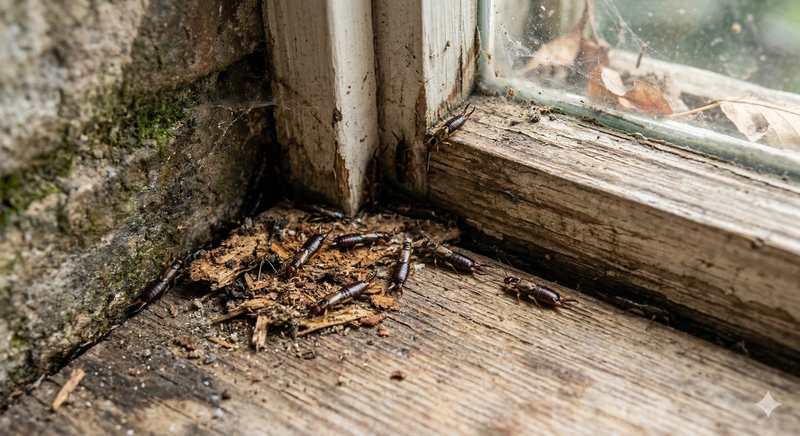
- Inside basements, bathrooms, or damp areas of the home
They may enter buildings through small cracks and openings, especially when outdoor conditions become too dry or too wet.
Are Earwigs Harmful?
Earwig are not dangerous to humans and are not venomous, although their pincers can look intimidating. However, they can become a garden pest and household nuisance, feeding on young plants, flowers, vegetables, and soft plant tissues, and often gathering in damp indoor areas like basements, especially after rainy weather. While they may damage plants, earwigs can also feed on small insects and organic matter, making them occasionally beneficial in gardens.
Earwig Prevention Tips
Preventing earwig problems involves reducing moisture and removing hiding places around your property
- Remove leaf piles, mulch, and garden debris near the house.
- Keep firewood and compost piles away from foundations.
- Avoid placing flower pots directly against walls.
- Improve drainage around the home.
- Repair leaking outdoor faucets or irrigation systems.
- Avoid excessive watering near the foundation.
- Close cracks around doors, windows, and foundations.
- Install door sweeps and repair damaged screens.
- Seal gaps around pipes and vents.
Professional Pests Control
If earwigs are appearing frequently in your basement, bathroom, or garden areas, professional pest control can help manage the infestation and prevent them from returning.
At R.D. Exterminateur, our technicians inspect your property, identify areas attracting earwigs, and apply targeted pest control treatments to reduce their presence around your home.
Contact our team today to schedule an inspection and keep your property comfortable and pest-free.

