
Carpenter Ants: Identification, Damage, Prevention & Control
What Are Carpenter Ants?
The Carpenter Ant is one of the largest ant species commonly found in homes and buildings. Unlike termites, carpenter ants do not eat wood, but they excavate it to create nests, which can cause structural damage over time.
Worker carpenter ants typically measure 6 to 13 mm in length, while queens can be even larger. They are usually black, dark brown, or reddish-black and have a smooth, rounded thorax and a single node between the thorax and abdomen.
Carpenter ants are most active at night, when they leave their nests to search for food.

Carpenter Ant Life Cycle and Development
Carpenter ants live in organized colonies consisting of workers, soldiers, and reproductive ants (queens and males).
A mature colony may contain thousands of ants. The queen lays eggs that develop into larvae, then pupae, and finally adult ants. Under favorable conditions, colonies can continue expanding for several years.
As carpenter ant colonies grow, they may create satellite nests in nearby structures, which allows the infestation to spread throughout a building.
Where Carpenter Ants Live
Carpenter ants prefer moist or damaged wood, which makes homes and buildings vulnerable to infestations.
Common nesting sites include:
- Wall voids and insulation
- Wooden beams and structural supports
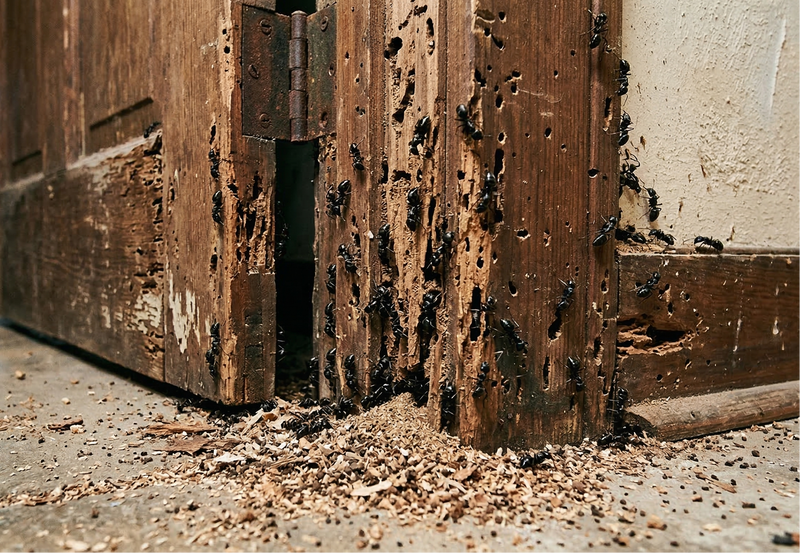
- Window and door frames
- Roof structures and attics
- Decks, porches, and fences
Outdoors, carpenter ants often nest in:
- Tree stumps or hollow trees
- Firewood piles
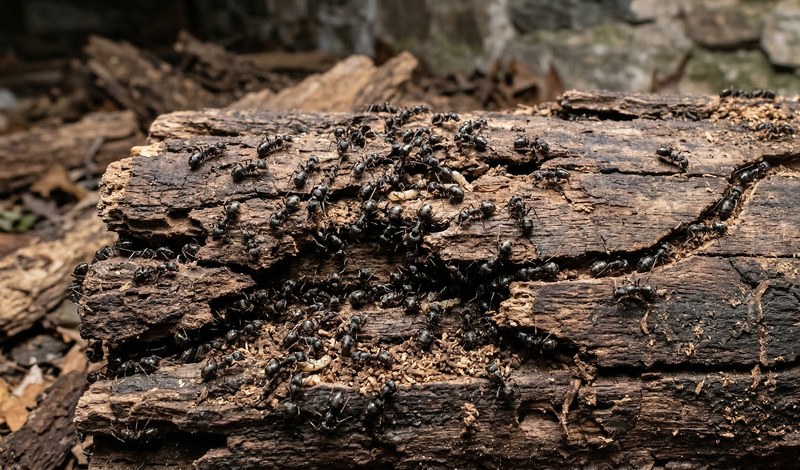
- Rotting logs and wooden structures
- Moist wood around buildings
If ants are seen inside the home, the nest may be located inside walls, ceilings, or nearby outdoor structures.
Are Carpenter Ants Harmful?
Carpenter ant are structural pests because they tunnel through wood to build their nests, which can weaken wooden structures over time. Common signs of an infestation include large black ants inside the home, small piles of wood shavings (frass) near walls or floors, rustling sounds inside walls, and winged ants appearing indoors during spring.
Carpenter Ant Prevention Tips
Preventing carpenter ants involves reducing moisture and removing wood that can attract nesting ants.
- Repair leaking roofs, pipes, and gutters.
- Improve ventilation in basements, crawl spaces, and attics.
- Replace damaged or rotting wood.
- Remove tree stumps and decaying wood near the house.
- Store firewood away from the foundation.
- Trim tree branches that touch the building.
- Close gaps around windows, doors, and foundations.
- Seal cracks where ants may enter.
- Repair damaged siding or wood structures.
Carpenter Ant Control Methods
Because carpenter ants often build nests inside hidden wall voids, wooden structures, or moisture-damaged wood, eliminating the entire colony can be difficult without a targeted approach. Effective carpenter ant control typically involves locating and treating the primary nest as well as any satellite colonies, using targeted bait systems, and repairing moisture-damaged wood that attracts nesting activity. It is also important to monitor areas where ants have been observed to identify ongoing activity. Simply killing the ants you see is usually not enough, as the main colony may remain hidden and continue to grow if the nest itself is not properly treated.
Professional Pests Control
If you notice large ants inside your home, wood shavings near walls, or winged ants appearing indoors, you may have a carpenter ant infestation that requires professional treatment.
At R.D. Exterminateur, our technicians inspect your property, locate hidden nests, and apply targeted carpenter ant control solutions designed to eliminate colonies and prevent future infestations.
Contact our team today to schedule an inspection and protect your home or business from structural pest damage.

